Budgeting Basics for Retirees
By Everyday Guide Hub Editorial Team · Last updated February 12, 2026
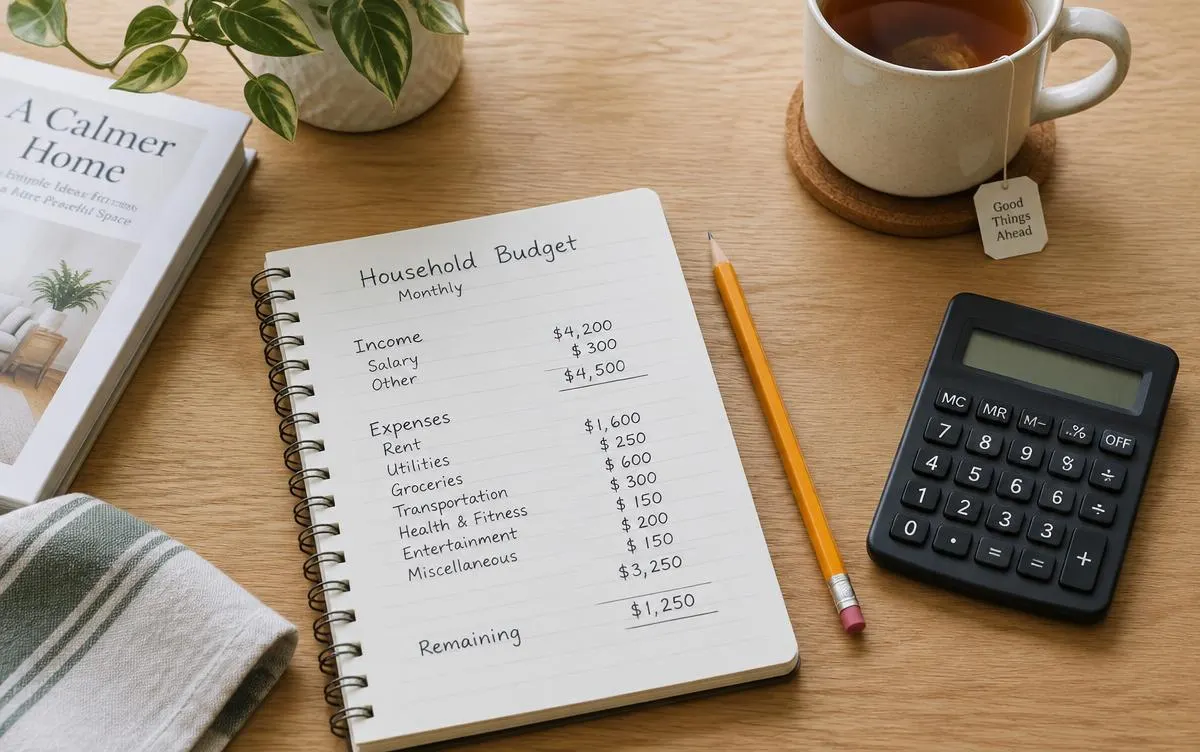
A practical introduction to organizing retirement income and expenses, planning for irregular costs, and reviewing a budget over time.
This guide is general information only and is not financial, insurance or legal advice. Please speak with a qualified professional about your own situation. Read our disclaimer.
Why a retirement budget is different
A retirement budget is a way to compare the money coming in with the money going out and to make those patterns easier to understand. The basic idea is familiar at any age, but retirement can change the timing and sources of income. A working household may receive a regular paycheck, while a retired household may rely on several sources that arrive on different schedules. Expenses can also shift: commuting and work clothing may decrease, while housing maintenance, travel, or health-related costs may become more prominent.
There is no single budget that fits every retiree. Some people have steady income that covers most regular expenses. Others draw from savings, receive income at different times of the year, or share household costs with family members. A useful budget does not assume that every month will look identical. It makes recurring costs visible, leaves room for changing circumstances, and can be revised when facts change.
A budget is not a prediction that every expense will be exact. It is a planning tool. Estimates are useful when actual figures are not yet available, provided they are identified as estimates and reviewed later. Keeping records for several months can reveal patterns that are hard to spot from memory alone.
You may also find helpful: How to review and cut subscription costs
Start with reliable income information
Begin by listing the sources of income that are expected during the period being planned. Depending on a household’s circumstances, that list may include retirement benefits, pension payments, annuity payments, part-time work, rental income, or withdrawals from savings. Record the amount, how often it arrives, and whether the amount is fixed or may vary.
Use current statements or other records when possible, rather than relying solely on an old estimate. Some income may be received monthly; other income may arrive quarterly or on an irregular schedule. To make a monthly view, a household can note the actual timing of each payment and separately calculate an average monthly amount for planning. An average helps with comparison, but it does not change the date money is available. A calendar can help connect payment dates with bill due dates.
It can be helpful to distinguish income that is relatively predictable from income that changes. For example, interest, investment withdrawals, or seasonal work may vary. A budget can show these separately rather than treating a fluctuating source as guaranteed. This makes it easier to see how the plan would look in a month when variable income is lower.
Avoid counting the same money twice. If funds have already been set aside for a specific bill or purpose, the budget should make clear whether they are part of current available income or already committed. A simple record of the source, date, amount, and intended use can prevent confusion.
Map regular and flexible expenses
Next, list expenses. Start with costs that are predictable and recur, such as housing payments, utilities, insurance premiums, subscriptions, transportation, and regular household supplies. Include expenses that may be paid automatically: they can be easy to overlook precisely because no action is required each month.
Then identify flexible costs, such as dining out, hobbies, gifts, or optional travel. Flexible does not mean unimportant. These categories are simply more likely to vary in timing or amount than a fixed monthly bill. Tracking them gives a more realistic picture of how everyday choices affect the overall plan.
A practical budget may group expenses into a few broad categories:
- Housing and household operations
- Food and everyday essentials
- Transportation
- Insurance and health-related costs
- Personal activities and gifts
- Savings, reserves, or planned purchases
The level of detail should be useful rather than burdensome. Someone who prefers a short monthly review may want a handful of categories. Another person may find that breaking out groceries, restaurants, fuel, and vehicle upkeep answers useful questions. A category can be divided later if it regularly hides important differences.
Use bills, account histories, receipts, or a written spending log to estimate amounts. When the total is uncertain, note a range or label the number as provisional. A budget that honestly reflects uncertainty is more useful than one that gives an impression of precision without supporting records.
Plan for expenses that do not arrive monthly
A monthly budget can look comfortable while overlooking costs that happen only once or twice a year. Property taxes, insurance renewals, vehicle repairs, appliance replacement, seasonal utility bills, family events, and travel may all create uneven spending. These expenses are easier to handle when they are visible before they arrive.
Review records from the previous year, if available, and make a list of irregular costs. For each item, note the likely timing and an estimate. Some costs, such as routine maintenance, can be anticipated but not known exactly. Others may be optional and scheduled with more flexibility. A separate reserve category can help distinguish money intended for future costs from everyday spending.
One way to plan is to divide a known annual cost into monthly portions on paper. For example, a yearly premium can be recorded as an annual bill and also represented as a monthly planning amount. That does not mean the bill is actually due monthly. The budget should preserve the real due date so the household can plan for when the cash is needed.
It is also useful to identify costs that are uncertain rather than simply irregular. A repair may not happen every year, and its price may be unknown in advance. A budget cannot guarantee that an unexpected bill will be covered. It can, however, make room to discuss how a household organizes reserves and what adjustments might be considered if a large cost occurs.
Compare the plan with actual spending
After building an initial budget, compare it with actual activity over a reasonable period. A month can offer a starting point, but a longer view may reveal seasonal patterns or occasional expenses. The aim is to learn, not to judge. A category that is higher than expected may point to a realistic cost, a one-time event, or an estimate that needs updating.
Keep the comparison simple. A table, spreadsheet, paper ledger, or budgeting tool can show the planned amount, actual amount, and difference. Choose a method that is comfortable and accessible. Some people prefer entering transactions as they happen; others review account statements and receipts at the end of each week or month.
When a difference appears, ask what explains it. Was the cost one-time or recurring? Did a bill change? Was income delayed? Does the category combine several different kinds of spending? These questions help turn the budget into a record of actual life rather than a fixed set of assumptions.
A review can also identify expenses that are no longer useful or services that are being paid for but rarely used. Any decision to change a service should account for the terms, costs, and practical consequences. The purpose of the review is to make information clearer, not to assume that every expense can or should be eliminated.
Make the budget adaptable
A retirement budget is best treated as a living document. Income, household arrangements, prices, health needs, and personal priorities can change. A budget that was useful last year may need new figures this year. Regular check-ins—such as a brief monthly review and a more thorough annual update—can help keep it relevant.
It may be helpful to keep a few scenarios in view. A usual-month plan can show recurring income and expenses. A separate note can describe how the picture changes when an annual bill arrives or variable income is lower. Scenarios are not predictions; they are ways to understand how different circumstances affect cash flow.
Consider keeping the records organized so that another trusted person can understand the basic picture if needed. This might mean maintaining a current list of regular bills, income dates, and budgeting categories in a secure place. Protect private account details and avoid putting sensitive information where it can be accessed casually.
A budget can also support conversations within a household. When people share costs, agree on how expenses are categorized and how often the plan will be reviewed. Clear records can reduce misunderstandings about who paid a bill or what a category includes. The budget should represent the household’s actual arrangement, not an assumption that everyone handles money in the same way.
Most importantly, a budget is a description and planning aid, not a measure of personal success. Its value lies in helping people see financial patterns, notice upcoming costs, and make informed decisions using their own circumstances and priorities. Small updates are often more sustainable than attempting a perfect system all at once.
Key takeaways
- List income sources, payment dates, and which amounts may vary.
- Separate regular expenses from flexible and occasional costs.
- Use past records to identify bills that do not arrive monthly.
- Compare planned figures with actual activity and update estimates.
- Treat the budget as a changeable planning tool, not a scorecard.
Frequently asked questions
How often should a retirement budget be reviewed?
A brief monthly check can catch changes in bills or spending, while a fuller review once or twice a year can update income, irregular costs, and household priorities. The useful schedule depends on how often circumstances change.
What if income arrives on different schedules?
Record each payment’s amount and expected date. A monthly average can help compare income with expenses, but keep the actual payment dates visible because an average does not show when money is available.
Should irregular expenses be included in a monthly budget?
Yes. Record the actual timing of annual or occasional bills and include a planning estimate so they are not mistaken for surprises. Estimates can be revised when better information becomes available.
Does a budget need a spreadsheet or an app?
No. Paper, a spreadsheet, or a budgeting tool can all work. The best format is one that is understandable, accessible, and easy enough to maintain consistently.
Written and reviewed by the Everyday Guide Hub Editorial Team. Read how we work in our editorial policy.
Continue reading
Personal Finance Basics
How to review and cut subscription costs
Streaming, apps, memberships—small monthly fees add up. A quick audit can reveal easy savings.
3 min read
Personal Finance Basics
Building an emergency fund, step by step
An emergency fund can soften the impact of unexpected costs. Here is a practical way to start, even with a small budget.
3 min read
Personal Finance Basics
How to Spot and Avoid Common Money Scams
Recognize common warning signs of money scams and learn practical ways to pause, verify, and protect personal information.
7 min read